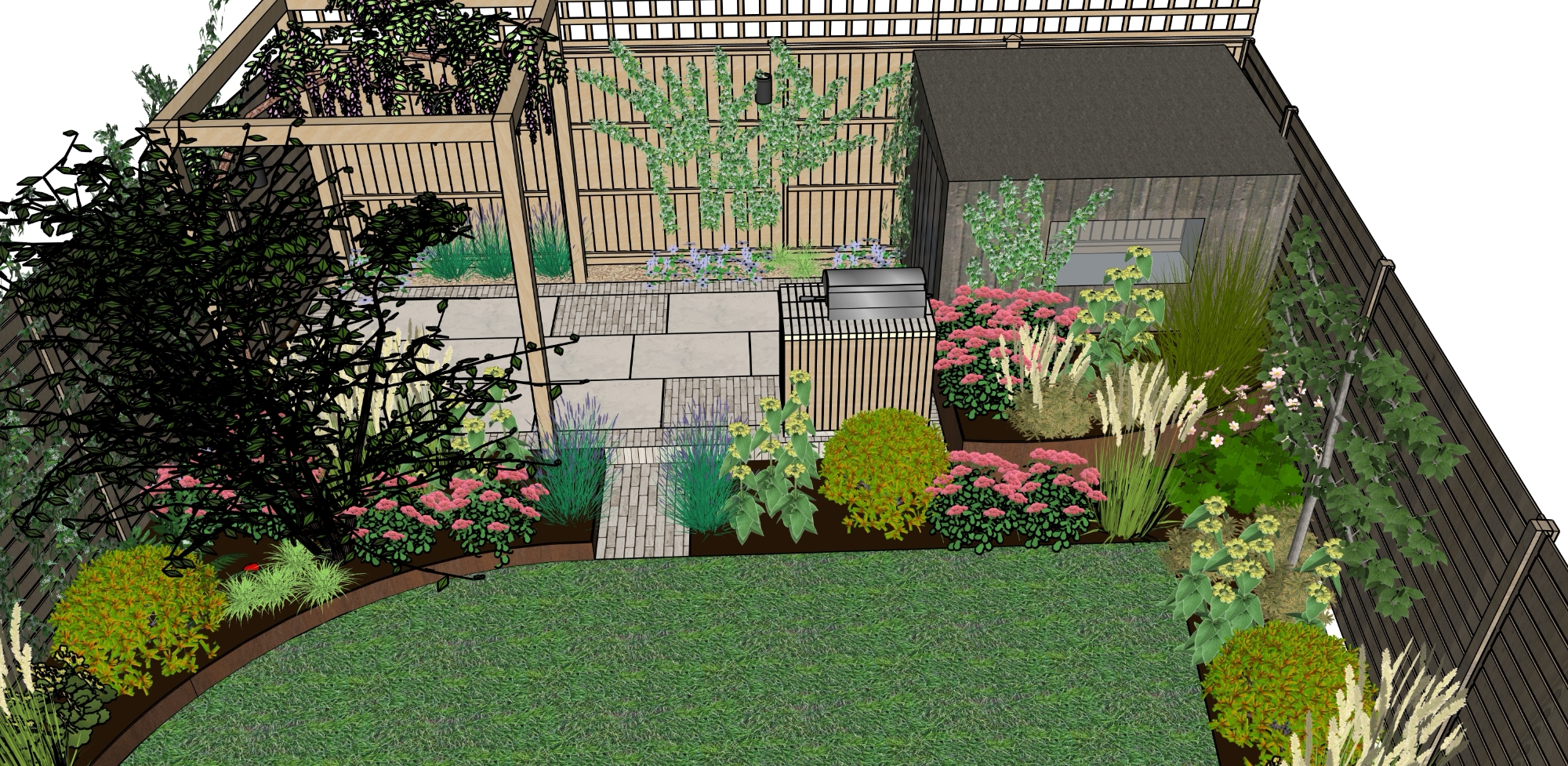
Small London Garden Ideas: Maximizing Terrace & Townhouse Outdoor Space
Small doesn't mean boring, in fact, small London gardens often become the most loved spaces precisely because every inch is thoughtfully designed. From compact East London courtyards to narrow Victorian terrace gardens, these intimate spaces can be transformed into genuine outdoor rooms that punch well above their weight. After designing dozens of urban gardens across London, here's what we've learned about making small gardens work brilliantly.
Small Doesn't Mean Boring
London Garden Sizes: What's 'Typical'
Most London terrace and townhouse gardens fall into:
- Tiny: 15-30m² (many inner London courtyards)
- Small: 30-50m² (typical Victorian terraces)
- Medium-small: 50-80m² (slightly more generous townhouses)
These might sound limiting, but we've created stunning gardens that feel spacious and function beautifully in all these sizes. The key is intentional design rather than trying to cram in everything you saw in a large country garden magazine spread.
Why Small Gardens Need MORE Design Thought, Not Less
Large gardens can absorb mistakes. Plant something in the wrong place? It's not the end of the world. Small gardens are unforgiving and every decision matters because every element is constantly visible. This is why professional garden design often makes the biggest difference in compact spaces.
Maximizing Space: Core Design Principles
1. The Illusion of Space
Clever design makes small gardens feel larger without actually changing their dimensions.
Diagonal Layouts and Sight Lines
Positioning elements diagonally rather than parallel to boundaries creates longer sight lines, making the garden feel larger. A diagonal terrace or path forces the eye across the space rather than straight to the back boundary.
Avoid seeing everything at once, gardens that reveal themselves gradually feel bigger. Use planting or subtle level changes to create discovery as you move through the space.
Using Levels and Steps
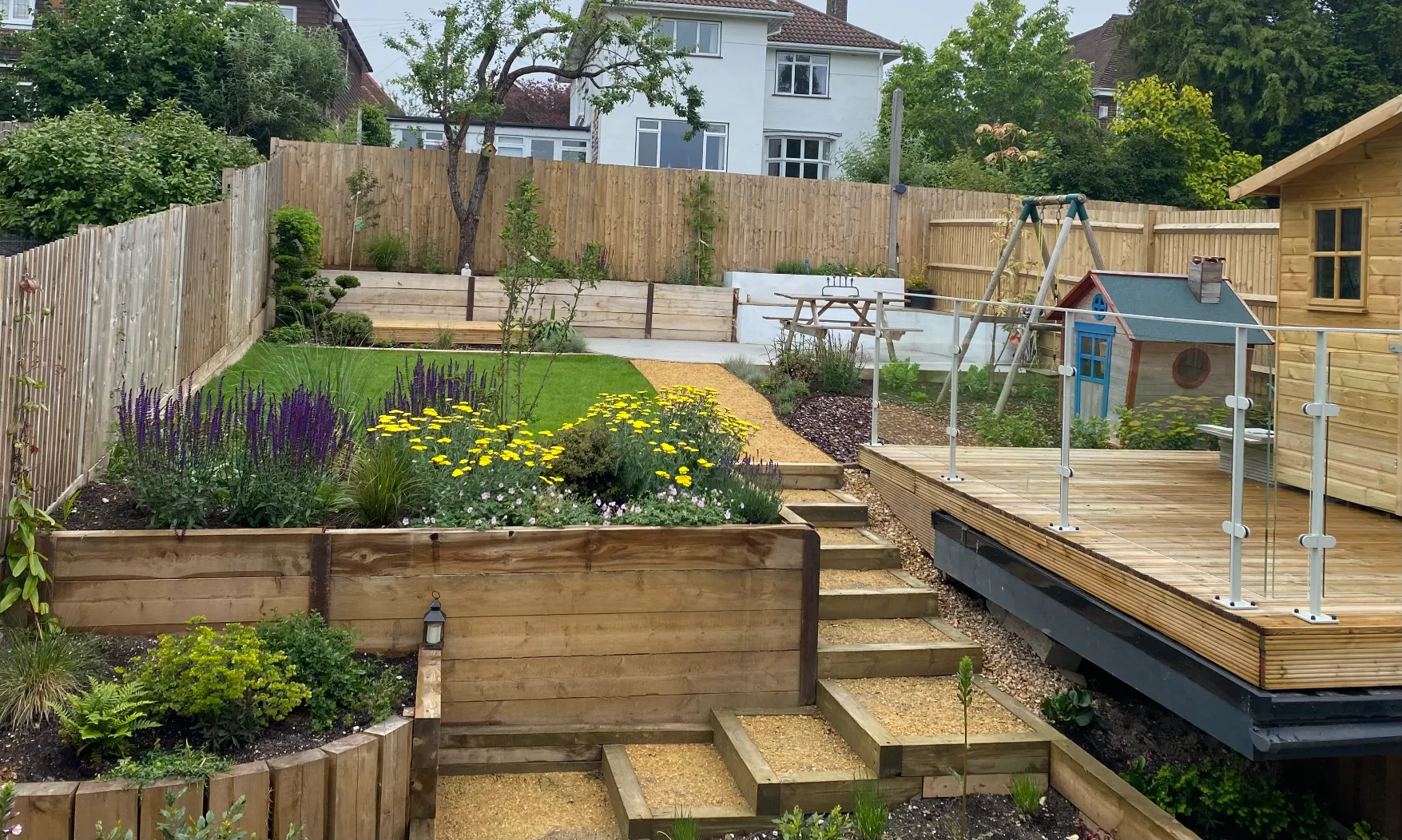
Even a single step up to a small terrace creates different zones and adds visual interest. Raised beds or sunken seating (even if it's just 200-300mm difference) helps define areas without using horizontal space.
Mirrors and Reflective Surfaces (When They Work)
Mirrors can work but need careful placement:
- Do: Use mirrors to reflect light into shady corners or multiply interesting planting
- Don't: Use obvious large mirrors that feel gimmicky or reflect ugly views
- Consider: Reflective water features, glossy tile work, or polished materials that bounce light without being obviously mirrors
2. Vertical Gardening
When ground space is limited, grow upwards.
Living Walls and Green Screens
Living walls create dense planting fixed to vertical surfaces which adds dramatic greenery without using floor space. They work best in:
- Shady North-facing walls (ferns and shade lovers thrive)
- As features near seating areas (creating immediate green impact)
- Replacing boring fence panels with texture and interest
Cost: £300-£600 per square meter for professionally installed systems with irrigation.
Climbing Plants and Trained Shrubs
More affordable than living walls, climbers achieve similar effects:
- Fast growers: Clematis montana, honeysuckle, jasmine (cover fences in 2-3 years)
- Architectural: Climbing hydrangeas, trained fruit trees (slower but stunning)
- Evergreen: Star jasmine, evergreen clematis (year-round coverage)
Train shrubs flat against walls (called espalier) to create impact without depth - this works beautifully for pyracantha, ceanothus, or camellias.
Wall-Mounted Planters and Features
Wall-mounted planters (minimum 30cm deep for decent planting), vertical herb gardens, wall-mounted water features all add interest at eye level without stealing ground space.
3. Multi-Functional Design
Everything should earn its place by doing more than one job.
Seating with Hidden Storage
Built-in benches with lifting lids store:
- Cushions and throws
- Garden tools
- Children's toys
- Barbecue equipment
This keeps small spaces clutter-free while providing essential seating.
Dining Areas That Fold Away
Wall-mounted drop-leaf tables, stackable chairs, or benches that tuck under the table when not in use mean you have dining space when needed without it dominating when you don't.
Play Space That Adapts as Children Grow
Designate zones that adapt: sandpit transforms to raised bed, play area becomes outdoor yoga space, toy storage becomes potting bench. Design for evolution.
4. Boundary Treatments
Making Overlooked Gardens Private Without Losing Light
London gardens are notoriously overlooked. Create privacy without creating a prison:
- Trellis with climbers: Filters views while allowing light through
- Tall border planting: Creates soft screening at eye level when seated
- Strategic screening: Block views only where needed rather than surrounding yourself with solid barriers
- Multi-stem trees: Create overhead privacy from upper floor windows
Clever Screening Ideas
- Slatted cedar screens (let light through while obscuring views
- Metal trellis panels with architectural climbers
- Living screens of pleached trees (hornbeam or lime) in narrow formats
Working With Party Walls and Shared Fences
Many London gardens share boundaries. Make the most of them:
- Paint walls in light colors to reflect light
- Create green walls on shared boundaries (transforms ugly brick)
- Ensure climbers are well-trained and maintained to avoid neighbor disputes
- Consider shared boundary improvements (splitting costs with neighbors)
Small Garden Styles That Work
Modern Minimalist
Clean , strong lines, limited material palette, bold planting. This style makes small spaces feel larger through simplicity.
Key elements:
- Large format paving (fewer joints, cleaner look)
- Single material palette (eg. white walls, grey paving, green planting—that's it)
- Architectural plants for impact (single specimens make bold statements)
- Built-in everything (reduces clutter)
Our Bow courtyard garden project demonstrates modern minimalist perfectly.
Lush & Layered
The opposite approach where you create the feeling of sitting in abundant greenery. Hide boundaries entirely with planting.
Key elements:
- Densely planted borders using every inch
- Multiple layers (ground cover, perennials, shrubs, climbers)
- Minimize hard landscaping (just enough terrace for seating/dining)
- Rich, rhythmic planting palette creating jungle effect
See examples in our courtyard gardens gallery.
Scandinavian Simplicity
Light wood, white or pale painted surfaces, simple green planting. Creates calm, bright spaces perfect for London's frequent grey skies.
Key elements:
- Pale color palette (whites, greys, natural timber)
- Simple planting (ferns, hostas, architectural grasses)
- Quality over quantity (fewer but better elements)
- Hygge-inspired cozy seating areas
Gravel & Prairie Style
Low maintenance, sustainable, wildlife-friendly. Works beautifully in small spaces.
Key elements:
- Gravel instead of grass (permeable, textured, low maintenance)
- Naturalistic planting (grasses and prairie-style perennials)
- Limited hard landscaping
- Relaxed, informal feel
Our Hackney gravel garden shows this approach.
Location-Specific London Challenges
East London Gardens
East London gardens often feature:
- Party walls on both sides (narrow plots)
- Industrial/warehouse conversions (unusual dimensions)
- Strong desire for contemporary aesthetic
- Young professional owners wanting low maintenance
Maximizing Party-Wall Spaces
Turn challenges into features:
- Green walls on brick party walls
- Integrated lighting highlighting wall texture
- Wall-mounted water features
- Coloured or mural feature walls
- Vertical herb gardens
Industrial-Chic Style Opportunities
Exposed brick, metal elements, concrete, bold contemporary planting perfect for East London gardens which often embrace urban aesthetic rather than fighting it.
North London Gardens
North London gardens typically:
- Victorian terraces with sloping plots
- Clay soil (requires drainage consideration)
- Tree-lined streets (shade challenges)
- Heritage-conscious owners
Dealing With Slopes (Many Victorian Terraces)
Many North London gardens slope away from the house:
- Consider creating levels to create usable flat areas
- Retaining walls create level changes (expensive but transformative)
- Steps can become attractive features rather than afterthoughts
- Sloped gardens actually offer opportunities for dramatic planting
Clay Soil Considerations
Heavy clay underneath much of North London requires:
- Proper drainage before hard landscaping
- Clay-tolerant plant selection
- Adequate patio foundations to prevent cracking
South London Gardens
South London gardens often enjoy:
- Slightly sunnier aspects (south-facing is common)
- Mix of Victorian and Edwardian properties
- Range of sizes from tiny to generous
Making the Most of Sunnier Aspects
With good sun exposure:
- Consider Mediterranean planting styles
- Outdoor dining spaces get maximum use
- Sun-loving plants (lavender, roses, salvias) thrive
- Think about shade for seating (pergolas, trees)
Balancing Privacy With Light
South London gardens are just as overlooked but with the complication that you don't want to block valuable sunlight. Use:
- Tall but airy boundary planting
- Pergolas that provide overhead screening without solid shade
- Deciduous climbers (privacy in summer when you're outside, more light in winter)
Smart Material Choices for Small Gardens
Why Larger Format Paving Can Make Space Feel Bigger
Counterintuitively, larger tiles often work better in small spaces:
- Fewer grout lines (cleaner, simpler appearance)
- Creates sense of spaciousness rather than business
- Easier to maintain (less grouting to clean)
Consider 60x60cm minimum, ideally 60x90cm for small gardens.
Porcelain vs Natural Stone in Small Areas
Porcelain advantages in small spaces:
- Never needs sealing (less maintenance matters more in small gardens)
- Consistent color (helps create cohesion)
- Rarely stains or mark
Natural stone advantages:
- More textural interest
- Natural variation
- Warmer underfoot
- Ages with character
Decking in Tight Spaces
Planting for Small London Gardens
The 'Right Plant, Right Place' Rule Is Crucial
In large gardens, mistakes disappear. In small gardens, every plant is constantly visible. Get it right:
- Check mature size (that "compact" shrub might be 2m x 2m)
- Match aspect (shade-lovers in shade, sun-lovers in sun)
- Consider your soil (clay, sandy, acidic, alkaline)
Shade-Tolerant Stars for North-Facing Gardens
Many London gardens are heavily shaded:
- Ferns: Polystichum, Dryopteris (texture and elegance)
- Hellebores: Early flowers, evergreen foliage
- Epimedium: Pretty flowers, good ground cover
- Japanese maples: Ultimate shade garden sophistication
- Hostas: Bold foliage (if you can protect from slugs- great for pots)
- Hydrangeas: Thrive in shade, long flowering season
Architectural Plants for Impact
Small gardens benefit from fewer, bolder plants:
- Fatsia japonica: Huge glossy leaves, bulletproof
- Tree ferns: Instant exotic impact
- Shade loving grasses: Anamethele lessoniana, Hakonechloa
- Cordyline: Architectural spikes, hardy varieties available
Scent and Sensory Planting in Close Quarters
In intimate spaces, scent matters more:
- Evening: Star jasmine, night-scented stock
- Day: Roses, lavender, Daphne
- Touch: Soft grasses, lamb's ears (Stachys)
- Sound: Grasses that rustle in breeze
Container Gardening: Making It Look Intentional
Random scattered pots look cluttered. Make containers intentional:
- Group in odd numbers (3, 5, or 7 looks better than even)
- Use matching containers (variations in planting, not containers)
- Integrate with borders (containers extend planting rather than being separate)
- Think about seasonal change (easy to refresh container planting for seasons)
Lighting Small Gardens
Why Lighting Is Even More Important in Small Spaces
Small gardens are constantly overlooked from inside the house. Lighting transforms them from black voids to attractive views even when you're not outside.
Creating 'Garden Room' Ambiance
Layer lighting:
- Ambient: Uplight walls or trees for background glow
- Task: Light seating and dining areas
- Feature: Highlight special plants or water features
- Path: Guide circulation safely
Budget: £1,800-£3,800 for comprehensive system in small garden.
Safety and Security Considerations
Well-lit gardens are safer:
- Illuminate steps and level changes
- Light thresholds between inside and out
- Consider motion sensors for security
- Integrate with smart home systems for remote control
Common Small Garden Mistakes to Avoid
Too Many Different Materials (Visual Clutter)
Limit materials:
- Single paving type (or max two)
- Consistent wall/fence treatment
- Coordinated plant containers
- Limited color palette
Trying to Fit Too Much In
That water feature, fire pit, dining area, play space, vegetable garden, AND lawn won't fit. Choose priorities.
Ignoring the View from Inside
You'll look at your garden from inside more than you're in it. Design views from key windows (kitchen, living room).
Neglecting Maintenance Access
You need to access all parts of the garden to weed, prune, and maintain. Don't plant yourself into a corner.
Choosing Plants That Outgrow the Space
That "moderate" shrub will be enormous in five years. Check mature sizes ruthlessly.
Storage Solutions
Bike Storage Ideas That Don't Dominate
Built-in bike stores with living roofs, wall-mounted bike racks that fold away, narrow bike stores tucked against boundary walls all beat bikes leaning against walls.
Bin Stores That Blend In
Custom timber stores with planted roofs, screened utility corners with trellis and climbers, integrated storage within built seating all hide unsightly bins better than plastic boxes.
Tool and Cushion Storage
Built-in bench storage, wall-mounted lockable boxes, under-terrace storage. Consider integrating storage rather than adding it afterwards.
Budget Considerations
Small Garden Doesn't Mean Small Budget
Paradoxically, small gardens often cost more per square meter:
- Materials ordered in small quantities cost proportionally more
- Fixed costs (design, access, permits) spread over less space
- Everything visible means materials can't vary in quality
- Custom elements (built-in seating, bespoke planters) are common
Cost Per Square Meter Often Higher
Typical costs:
- Small London courtyard (30m²): £500-£1,000/m²
- Medium suburban garden (100m²): £350-£600/m²
- Large rural garden (300m²): £200-£400/m²
See our pricing guide for London-specific costs.
Small Garden Transformations: Case Studies
20m² East London Courtyard: £15,000 Transformation
Before: Concrete yard, nothing growing, used for bin storage only
After:
- Porcelain paving with built-in bench (3m)
- Green wall on one boundary (6m²)
- Minimal planting: tree fern, Japanese maple, shade perennials
- Integrated LED lighting
- Hidden bin store
Result: Small courtyard transformed into genuine outdoor room used daily, adding significant value to flat.
40m² North London Victorian Terrace: £20,000 Project
Before: Tired paving, broken fence, overgrown planting
After:
- Natural stone patio (15m²)
- Cedar slatted screens replacing fences
- Terracing to manage slope (two levels)
- Comprehensive shade-tolerant planting
- Lawn replacement with gravel and planting
- Integrated lighting
Result: Sloping Victorian garden transformed into usable, attractive space with distinct dining and relaxation zones.
Next Steps
Small London gardens are our specialty and we understand the unique challenges and opportunities these intimate spaces present. Browse our gallery specifically filtering for small urban spaces.
Covering London-wide, we'd love to help transform your small garden into a space you genuinely love. Get in touch for your free consultation.
Related posts

Diary of a Garden Design and Build
Complete Garden Transformation: A Step-by-Step Guide to Redesigning Your Outdoor Space