
Coastal Garden Design
Working With the Elements
At Wild Butterfly Gardening, we design coastal gardens that work with the elements rather than against them. Drawing on our experience across Cornwall, Sussex, Kent, and the Somerset coast, we create resilient outdoor spaces that celebrate seaside living while providing the shelter and beauty every garden deserves.
The Unique Challenges of Coastal Gardens
Salt and Wind Exposure
The combination of salt spray and persistent wind is the defining challenge of coastal gardening. Salt deposits on leaves cause scorching and dehydration, while wind physically damages plants and dramatically increases water loss. Gardens within 500 metres of the sea face the most intense exposure, though salt can travel several miles inland during storms.
Soil Conditions
Coastal soils vary enormously. Sandy soils drain rapidly and lack nutrients, common along much of the South Coast. Chalky soils are alkaline and free-draining, typical of Sussex and Kent coastlines. Clay pockets can occur surprisingly close to the coast in some areas. Rocky and thin soils challenge Cornish clifftop gardens.
Microclimate Variations
Coastal properties often contain multiple microclimates within a single garden. A sheltered corner against a south-facing wall might support Mediterranean species, while an exposed boundary needs tough native planting. Understanding these variations is essential to successful design.
Design Principles for Coastal Gardens
Creating Shelter
The first priority in any exposed coastal garden is establishing windbreaks. We layer protection using living windbreaks such as tamarisk, escallonia, and olearia that filter wind while adding beauty. Structural screens like timber hit-and-miss fencing, gabion walls, or woven willow reduce wind speed without creating damaging turbulence. Landform with gentle mounding and sunken areas creates sheltered pockets.
Effective windbreaks can reduce wind speed by up to 50% in the sheltered zone behind them, transforming what's possible to grow.
Embracing the Setting
The most successful coastal gardens don't fight their environment—they celebrate it. We design to frame sea views while providing necessary shelter, use materials that echo the local coastal vernacular like beach pebbles, driftwood, and weathered timber, create flowing, naturalistic planting that moves beautifully in the breeze, and connect visually with the wider landscape through borrowed views and complementary colour palettes.
Plants for Coastal Gardens
Windbreak and Hedge Plants
These tough species form the outer defence: Tamarisk with feathery pink flowers, exceptionally salt-tolerant. Escallonia, evergreen with red, pink, or white flowers. Olearia (Daisy Bush) with silver-backed leaves and white daisy flowers. Griselinia with glossy apple-green leaves and dense habit. Sea Buckthorn, native, nitrogen-fixing with orange berries for wildlife.
Ornamental Planting
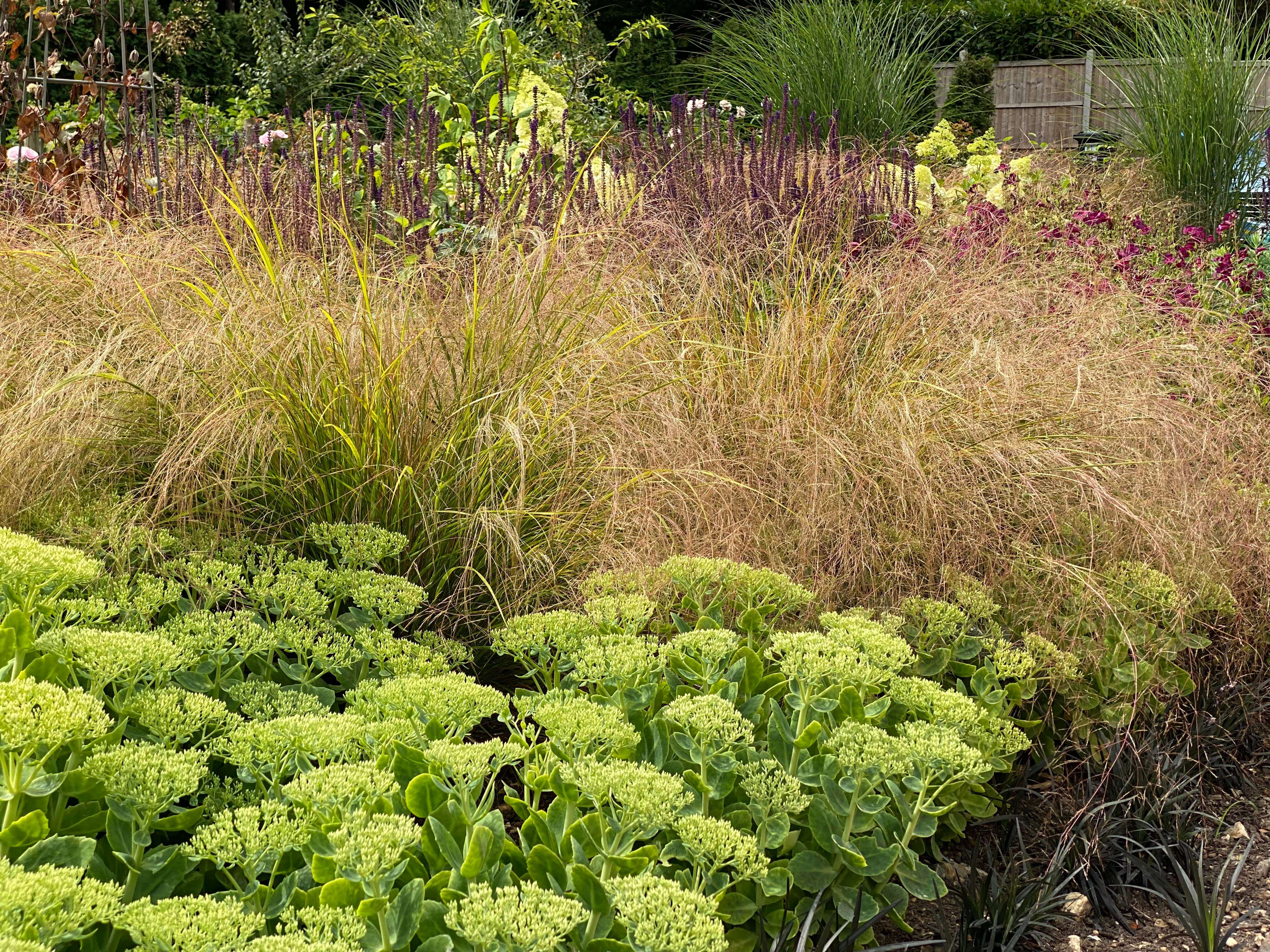
Once shelter is established, a wider palette becomes possible. Grasses like Stipa, Miscanthus, and Pennisetum dance beautifully in coastal winds. Mediterranean species—lavender, rosemary, cistus, and santolina—thrive in free-draining soil. Coastal natives like sea holly, thrift, sea kale, and samphire connect to the local landscape. Succulents including sedums, sempervivums, and some agaves handle salt and drought.
Hard Landscaping for Coastal Gardens
Coastal conditions demand materials that weather gracefully. Natural stone connects to the landscape; granite, slate, and limestone all perform well. Porcelain paving is non-porous, won't absorb salt, and requires minimal maintenance. Gravel and pebbles create authentic coastal character. Hardwood timber like oak and iroko weathers to silver-grey, complementing the coastal palette.
Some materials struggle in coastal conditions. Untreated softwood rots rapidly in damp, salty air. Some natural stones absorb salt and deteriorate. Metal fixings and furniture need marine-grade stainless steel or galvanised finishes.
Coastal Garden Design by Location
Cornwall Coastal Gardens
Cornish gardens enjoy milder winters thanks to the Gulf Stream, enabling subtropical planting in sheltered spots. We create dramatic clifftop gardens with borrowed views of the Atlantic, exotic planting schemes featuring echiums, agapanthus, and cordylines, integration with the rugged Cornish landscape, and manage steep sites and limited access.
Sussex Coastal Gardens
The Sussex coast offers diverse conditions from exposed shingle beaches to sheltered chalk valleys. We design contemporary seaside gardens for Brighton and Worthing properties, traditional cottage-style planting for South Downs villages, balance sea views with privacy in built-up coastal towns, and work with chalky soils and flint-rich local materials.
Kent Coastal Gardens
Kent's coast ranges from the dramatic White Cliffs to the unique shingle landscape of Dungeness. We create gardens that embrace the stark beauty of exposed coastal settings, shelter for properties facing the English Channel, wildlife-friendly designs that support coastal ecosystems, and work with the area's distinctive architectural heritage.
Coastal Garden Investment
Coastal garden projects typically range from £20,000–£35,000 for small courtyard or town gardens, £35,000–£60,000 for medium coastal gardens, and £60,000–£120,000+ for large clifftop or beachfront properties.
Coastal gardens often require more substantial groundwork for shelter establishment and may need specialist access arrangements for clifftop or remote properties. For a realistic sense of costs for your specific project, explore our pricing page which includes a project simulator.
Our Coastal Garden Projects
Browse our portfolio below to see how we've transformed coastal properties across Cornwall, Sussex, and Kent. From windswept clifftops to sheltered seaside courtyards, each project demonstrates how thoughtful design creates beautiful, resilient gardens by the sea.
Ready to create a coastal garden that thrives? Get in touch for a free consultation.
Explore some of our recent work
Harness the Potential of Your Garden with Our Expert Services
Garden Design
From initial consultation and site survey to detailed 3D concepts and planting plans, our design process is thorough and collaborative, ensuring your vision becomes a reality.

Consultancy
We can help with troublesome areas, best locations for patios or pergolas as well as ideas for planting schemes with our consultancy service
Landscaping
Our team works with trusted contractors or your preferred choice to deliver exceptional results, including add-ons such as lighting, irrigation, and garden furniture.
Planting
Our expertise extends to designing and implementing planting schemes for full gardens, raised beds, window boxes, edible garden schemes, and troublesome areas, as well as lawn installation and maintenance.
Maintenance
Choose from regular, seasonal, or one-off MOTs to keep your garden in optimal condition throughout the year.